
Our process
One-piece multi-directional forging for ball valve bodies
Integrated multi-directional forging — 一体式多向锻, also called one-piece multi-ram forging — forms the bore and the perpendicular stem boss of a valve body in a single heat. This is the capability we would most want a valve engineer to understand.
The problem with forging a valve body
A ball valve body is an awkward shape to forge. It has a main bore running through it, a stem boss standing perpendicular to that bore, and end connections at each side. Conventional closed die forging presses metal in one direction only, which leaves the designer two poor options: forge a simple blank and machine the branch features out of solid metal, or make the body in two pieces and weld them together.
Machining from solid wastes material and, worse, cuts straight through the grain exactly where the stem boss meets the bore. Welding introduces a seam into the pressure boundary — a seam that has to be inspected, qualified, heat treated and lived with for the life of the valve.
How multi-directional forging solves it
The billet is enclosed in a split die, and several punches act on it from different directions — vertically and horizontally — within a single heat and a single forming operation. The main bore and the perpendicular stem boss are formed at the same time, in one piece.
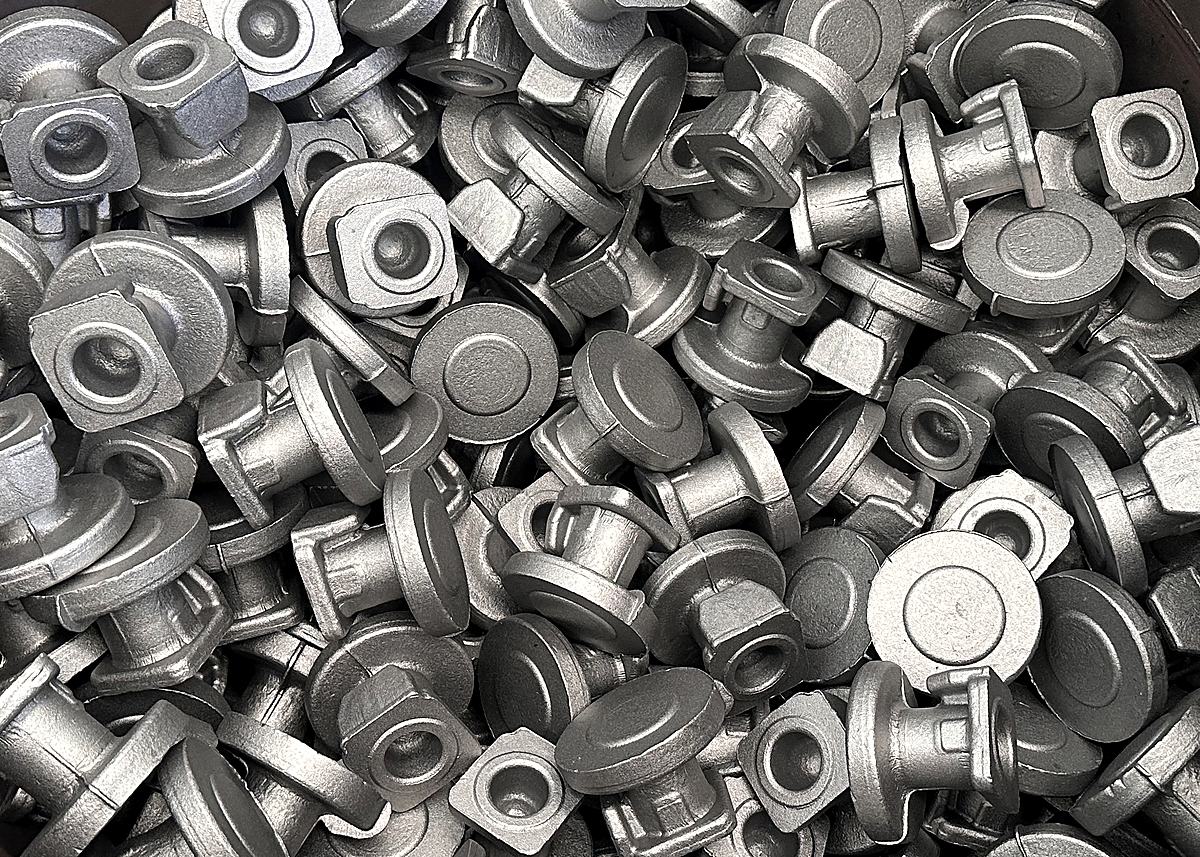
What that gives the valve maker
- A one-piece pressure boundary with no weld. There is no weld seam to inspect, no heat-affected zone, no post-weld heat treatment to qualify, and no welded joint to become a leak path in service.
- Grain flow that continues into the branch. In a conventionally forged or machined body the grain is cut through where the stem boss meets the bore — exactly where stress concentrates. Multi-directional forging carries the grain around that transition, which is where fatigue cracks would otherwise start.
- The bore is formed, not drilled. Metal is displaced rather than removed, so material utilisation rises sharply and the chip volume in your machine shop falls.
- Better concentricity between bore, seat pockets and stem bore, because the features are formed in one operation in one die rather than set up separately.
- More uniform wall thickness, which means a lighter body at the same pressure rating and a more predictable machining allowance.
- Fewer operations overall — a shorter route, fewer setups, fewer places for a dimension to drift.
Where it matters most
For low fugitive-emission designs and sour service, where every joint is a liability and every stress concentration matters, a one-piece multi-directionally forged body is a materially better starting point than a welded or machined-from-solid alternative. It is also the reason a forged blank that looks more expensive on the quotation often costs less by the time the valve is assembled and tested.
Frequently asked questions
What is multi-directional forging?
Multi-directional forging, also called multi-ram forging, encloses the billet in a split die while several punches act on it from different directions — vertically and horizontally — within a single heat and a single forming operation. For a ball valve body it forms the main bore and the perpendicular stem boss at the same time, in one piece.
Why is a one-piece forged valve body better than a welded one?
A one-piece body has no weld seam to inspect, no heat-affected zone, no post-weld heat treatment to qualify, and no welded joint to become a leak path in service. For low fugitive-emission designs and sour service this matters a great deal.
Does multi-directional forging reduce machining?
Yes. The bore is formed by displacing metal rather than drilling it out, so material utilisation rises sharply and chip volume in the customer's machine shop falls. Features formed in one die also improve concentricity between bore, seat pockets and stem bore.
Send us a drawing
Send a 3D model and a 2D drawing with the material specification and annual volume, and we will tell you whether your body suits multi-directional forging, what the tooling would cost and what the blank would weigh.
Request a quotation Read: the advantages of closed die forging